İşgüzar səfər üçün səmərəli marşrutlar və nəqliyyat məsləhətləri
Business travel requires a clear approach to routing and transport that prioritizes time efficiency, reliability and preparedness. This article outlines practical steps to plan routes, manage transfers and handle local mobility while maintaining focus on the objectives of a business trip. The guidance is procedural and avoids promotional content.
Introduction to route planning and transport choices
Effective planning begins with mapping the sequence of meetings and identifying the most logical order for visits. Start from the fixed points of arrival and departure, then arrange appointments to minimize backtracking. Consider travel time as part of the working day to set realistic expectations for productivity.
Choosing transport modes should reflect the balance between cost, time and predictability. When planning, assess options for direct transfers, shared services and public transport, and factor in typical urban congestion and potential delays. Build margins into schedules rather than relying on tight connections.
Transfers and airport connections
Airport transfers are a common pain point for business travellers. To reduce uncertainty, determine the typical transfer time between the airport and the business district, and allow extra time for baggage handling and security processes. Identify reliable transfer options that align with your arrival and meeting times.
When arranging a transfer, confirm meeting points and local landmarks to avoid confusion on arrival. Clear, simple directions and agreed meeting locations reduce the chance of missed connections. If multiple travellers are arriving, coordinate timing to simplify onward travel from the airport.
Consider the implications of flight schedules on ground travel. Early morning or late evening arrivals can change the availability of certain transport modes, so verify operating hours for any chosen service. Contingency plans for unexpected delays help keep the itinerary manageable.
Local mobility during the trip
Within an urban area, short trips between meetings can be most efficient when combining different transport modes. Walking can be faster for nearby appointments, while rapid shared rides or public transit may outperform private vehicles in congested corridors. Evaluate each segment on its own merits rather than defaulting to a single transport type for all movements.
For trips that require punctual arrival, prefer options with consistent timings over those with variable journey times. Reliable services reduce stress and support on-time performance. When using hired vehicles, allow for pickup and drop-off variability by allotting buffer time ahead of meetings.
Keep documentation and contact details easily accessible for drivers, concierge services and local contacts. Clear communication about destinations and any access requirements streamlines each leg of travel and reduces wait times on the ground.
Risk management and practical tips
Prepare for common disruptions by creating simple contingency plans. Identify alternate routes, secondary meeting locations and backup transport options. Communicate these contingencies with colleagues and, where appropriate, with local partners so adjustments can be enacted smoothly.
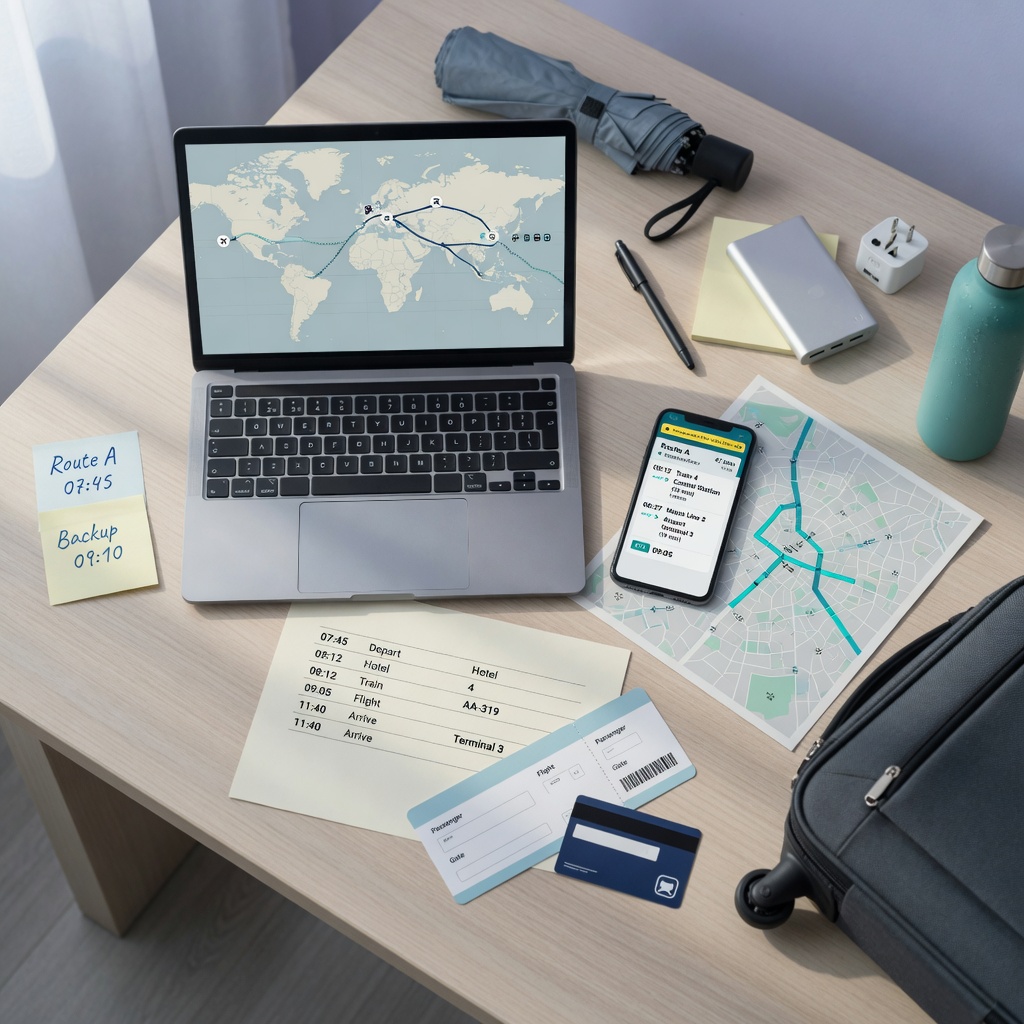
Pack and carry essentials that support mobility, such as compact chargers, a printed copy of key addresses and a small kit for minor delays. Maintain awareness of luggage and document storage during transfers to prevent last-minute complications that can ripple through a tight business schedule.
Monitor travel conditions where possible and update plans when significant disruptions are reported. A modest lead time for changes helps preserve meeting integrity and reduces the need for rushed decisions.
Conclusion
Efficient business travel rests on careful sequencing of visits, informed choices about transfers and transport, and simple contingency planning. By mapping routes to minimize unnecessary travel, selecting dependable transfer options and preparing for common disruptions, travellers can protect time for core business activities. Practical preparation and clear communication are the most reliable tools to keep a business itinerary on track.